No one can predict a graded card's value exactly. Sales of the same card in the same grade usually differ by about 7.5 percent. The causes are things no one sees: who was bidding that night, how each copy looked, how buyers acted. Our math is imperfect too. We measure how close we get and show you.
Each card counts once, whatever its price. A card's recent sales are compared with its own earlier sales.
Current period: Sep 19 to Oct 18 (last 30 days). Earlier period: May 21 to Sep 18 (30 to 150 days ago).
In the last 30 days, 173 of 188 cards (92 percent) sold above their own earlier prices. 3 (2 percent) sold lower, and 12 (6 percent) about the same. ↑ Rising broadly.
188 of 190 cards in this group had enough sales to compare.
All tracked cards↑ Rising broadly
188 of 190 cards had sales to compare · 92% of them sold higher · 2% lower
92
79% → 92%Cards selling higher: up 31 percentage points from four weeks ago (61 to 92 percent of 188 cards)
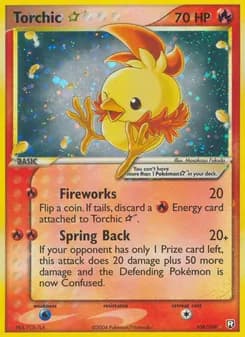
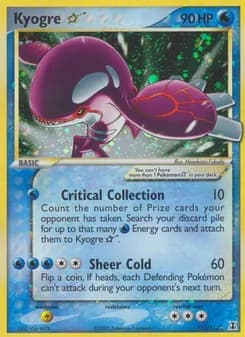
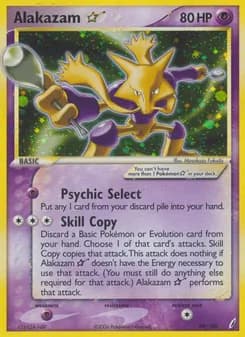
EX2003–2007↑ Rising broadly
59 of 60 cards had sales to compare · 98% of them sold higher · 0% lower
98
75% → 98%Cards selling higher: up 21 percentage points from four weeks ago (77 to 98 percent of 59 cards)
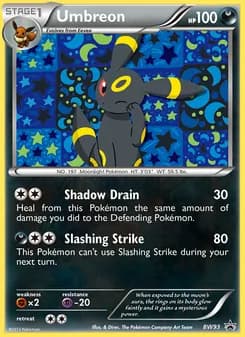
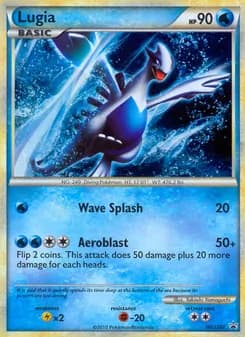
DP–HGSS2007–2011↑ Rising broadly
32 of 33 cards had sales to compare · 94% of them sold higher · 3% lower
94
82% → 94%Cards selling higher: up 25 percentage points from four weeks ago (69 to 94 percent of 32 cards)
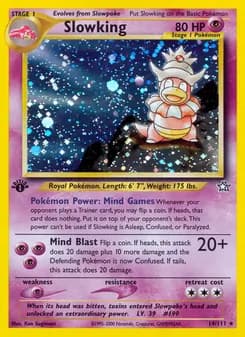
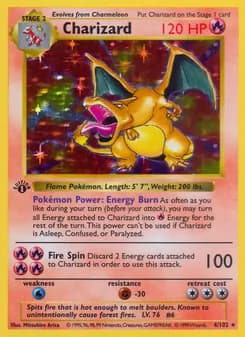
Wizards1999–2003↑ Rising broadly
70 of 70 cards had sales to compare · 91% of them sold higher · 0% lower
91
85% → 91%Cards selling higher: up 41 percentage points from four weeks ago (50 to 91 percent of 70 cards)
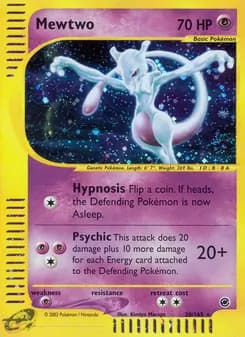
BW onward2011+↑ Rising broadly
27 of 27 cards had sales to compare · 78% of them sold higher · 7% lower
7815
61% → 78%Cards selling higher: up 34 percentage points from four weeks ago (44 to 78 percent of 27 cards)
Bars show the share of cards selling higher (blue), about the same (grey) and lower (orange). The small line shows the share selling higher each week for 26 weeks.
Rising broadly: 70 percent or more sold higher. Mostly rising: more than half sold higher. Falling broadly and Mostly falling work the same way for lower prices. Steady: at least half sold about the same. Anything else is Mixed.
How this is calculated
A grade (card, printing, grader and grade) is matched when it has at least 1 valid sale in the current period and at least 2 in the earlier period. Earlier sales are moved to the present by the change in their era or set index since the sale (read up to 45 days ago, where the index is complete). A card is matched when at least one of its grades is matched.
Each matched grade's difference is its current-period adjusted median minus its earlier-period adjusted median, in log terms. A card's difference is the median of its matched grades' differences (the mean of the middle pair when even). About the same means within 5 percent either way (0.05 in log terms).
Groups show a label only with at least 8 matched cards. Updated October 18, 2026. Methodology
Counts completed sales only; it does not predict prices and never changes an estimate.